Lloyds Bank
Designing the bank branch of the future
The challenge
Lloyds Bank are opening a ‘flagship’ bank branch in Manchester. This isn’t a standard bank branch. This is a new type of branch, to support new customer expectations.
My colleague and I were tasked with designing the proposition and experience.
Impact
The Lloyds Business Hub is retaining and earning new business banking customers in the North West.
Small business owners have praised the branch for the support it provides in helping their business grow.
My role
User research
Planned and executed depth interviews, observation, user testing and shadowing. The learnings from which informed ideation, iterations and the overall strategy.
Concepting
Coming up with a range of solutions both big and small to help meet the needs of the diverse mix of customers we were designing for.
Testing and iterating (A physical space and digital products)
Testing design efforts my colleague and I came up with. As this project was largely non-digital, we created ‘mockups' of the space using paper, cardboard and acting out interactions.
Vision setting
Coming up with a vision of what the Flagship branch could be and could achieve long term. Communicated through storyboards and journey maps.
Proposition design
A clearly defined, designed and validated proposition that Lloyds Banking Group could take away and execute upon.
Experience design
Building upon the proposition of the flagship, my colleague and I designed the ideal customer experience for the flagship.
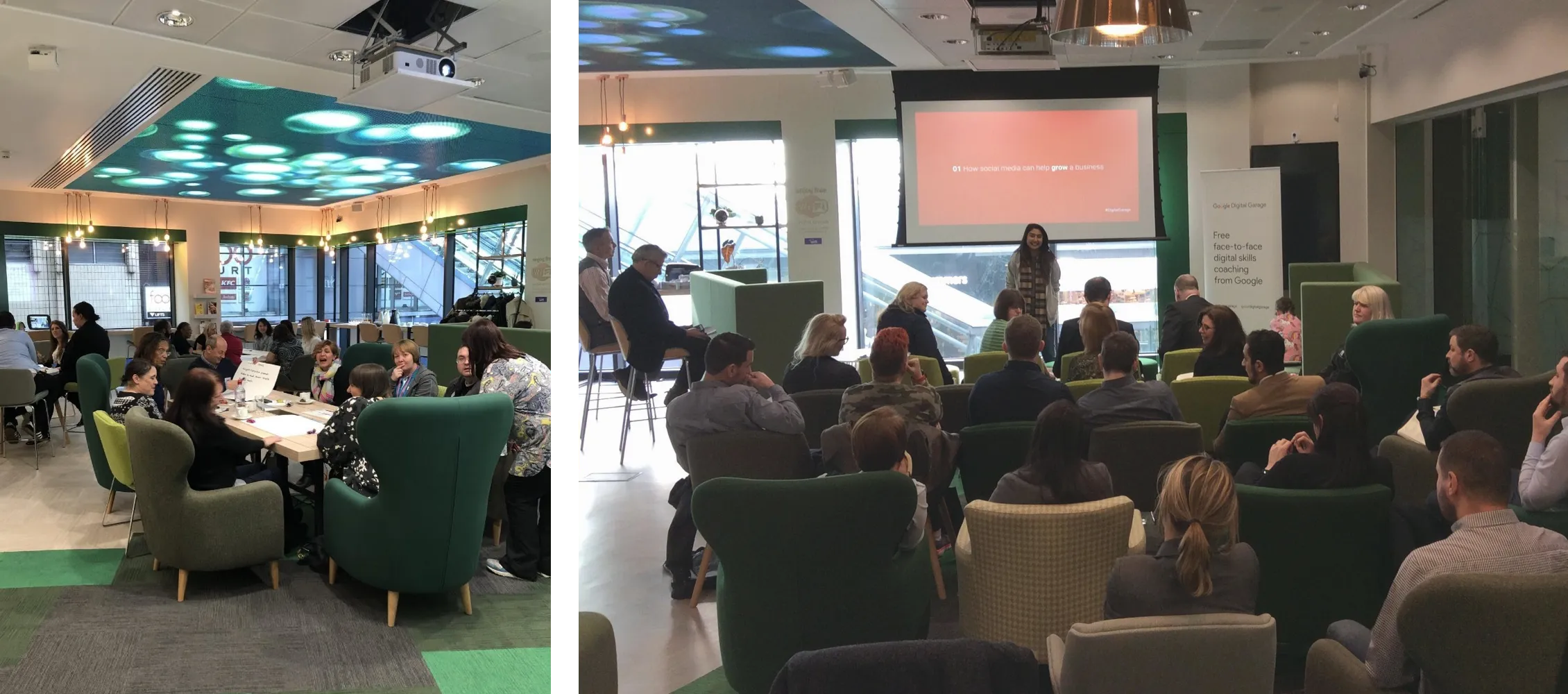
But bank branches are closing, no?
Banks are closing their branches from the high street as more customers move to online methods to complete tasks they used to do in branch, such as:
- Checking balances
- Moving money
- Opening accounts
- Customer support
The branch needs to repurpose
But bank branches are still important. They play a major part of the banks brand. They give trust and branch presence is a big factor when deciding who to bank with.
But the current bank branch as we know it needs to reinvent itself, its purpose, value proposition and explore new ways in which it can help customers.
Lloyds Banking Group (LBG) understand this
LBG are aware of the importance of the branch but acknowledge they need to change in order to keep up with customer expectations.
LBG had a fixed deadline to open a brand new branch in Manchester, a ‘flagship’ branch. This wouldn’t be a typical branch, the expertise and tools available would be unique.
“It was a truly double diamond project.”
The brief
"We want to use the top floor of the branch to support our Business Banking customers and think a co-working space might work well.” Head of Branch Formats & Design at Lloyds Banking Group, our client.
It was a fuzzy and ambiguous statement at the time. One with little detail surrounding its mechanics, and most importantly no data backing it.
So that’s where we came in. My colleague and I were tasked with proving/disproving this hypothesis and coming up with a clear, well defined and designed proposition.
“We were tasked with proving/disproving this hypothesis and designing a clear proposition and in branch customer experience.”
Discover
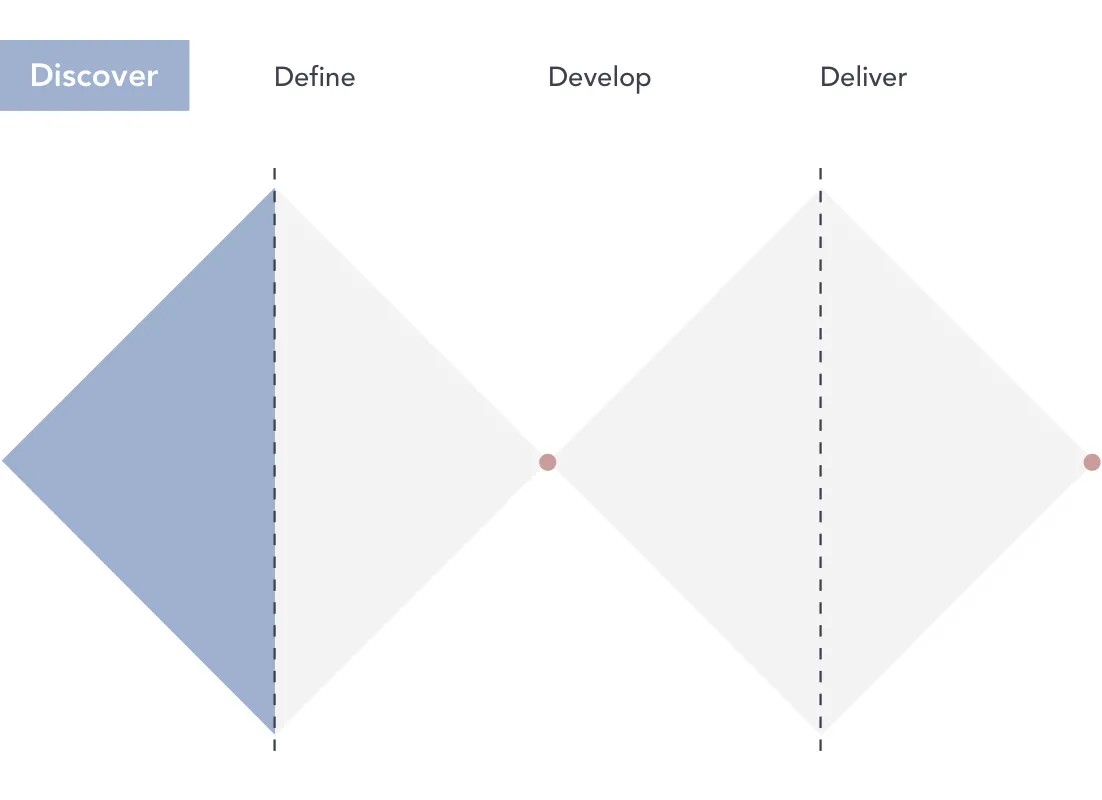
We kicked off with a rigorous discovery process, conducting rounds of one to one depth interviews with small business owners in and around Manchester.
When we came across an unanswered need or frustration from the business owner we went deep, and explored it further to uncover if it was an opportunity.
We did three days in a row of depth interviews. At the end of each day we took time to reflect on how the research played out, what we should drop and areas we should add.
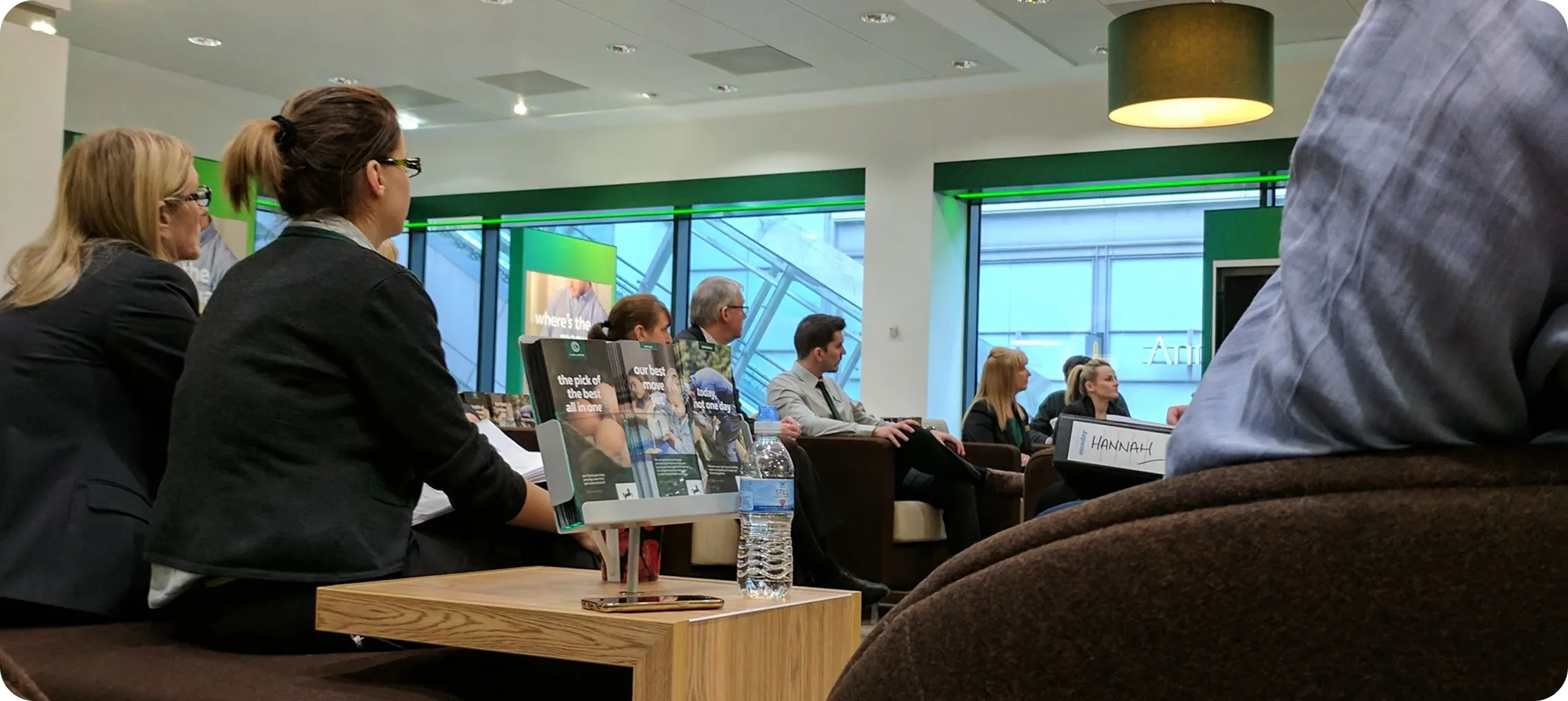
Competitor analysis… aka going undercover
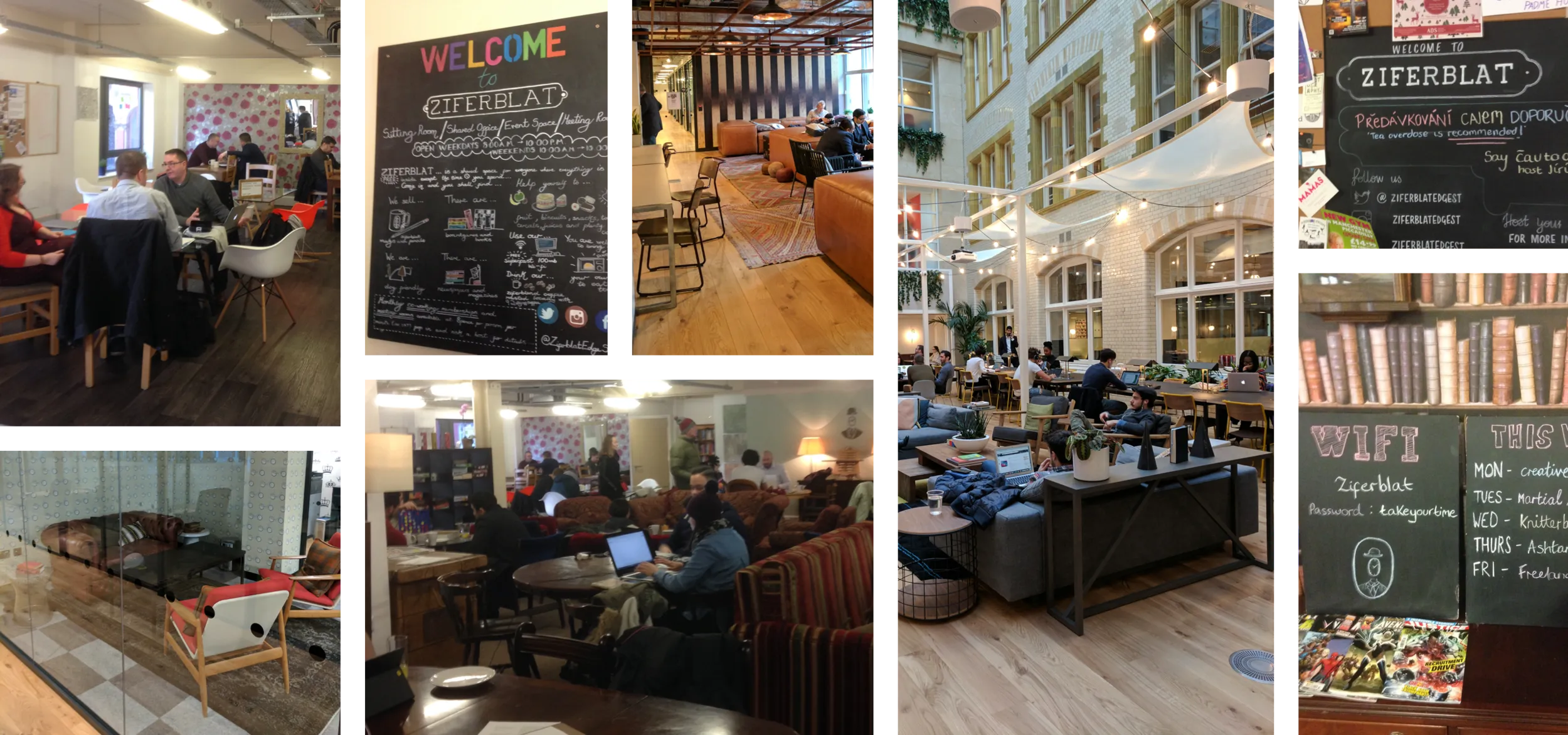
To complement our user research we went undercover into successful co-working spaces to understand what they were doing well, and how.
When designing a physical space competitor research is difficult. Competitors aren’t as accessible as opening a new tab. We visited popular co-working spaces in Manchester and London to see what’s on offer.
“Analysing competitor experiences wasn’t as easy as opening a new tab, so we went undercover.”
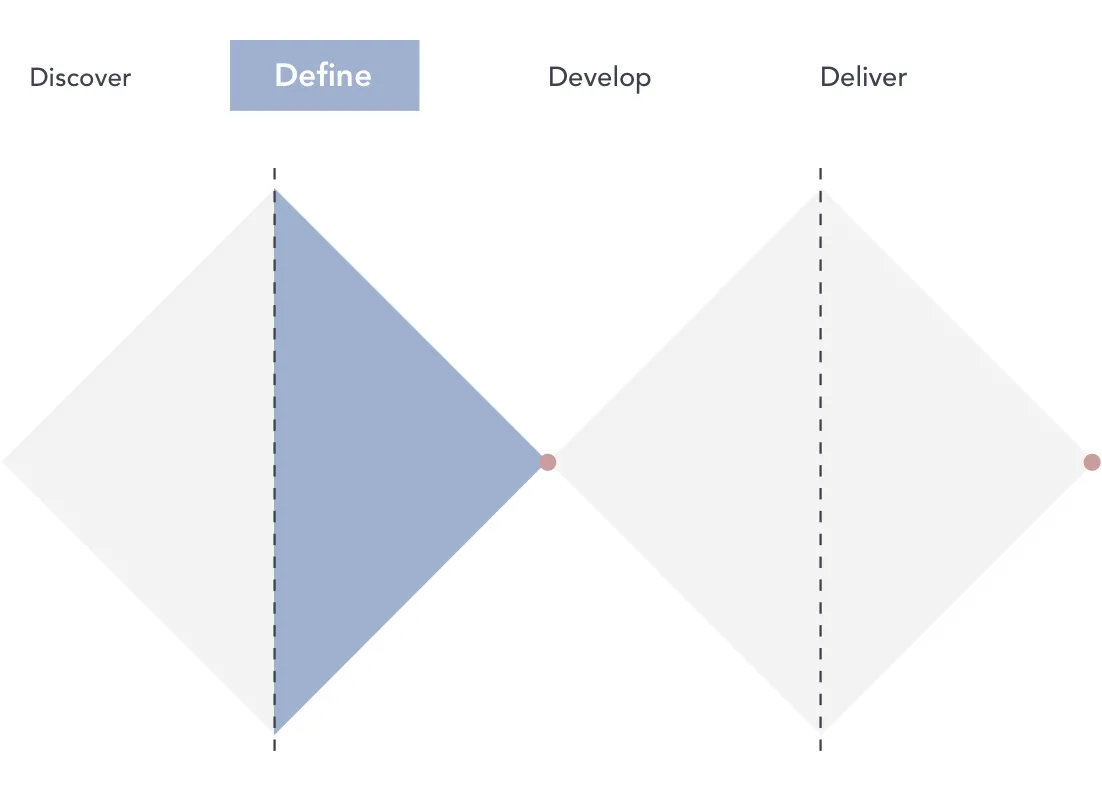
Define
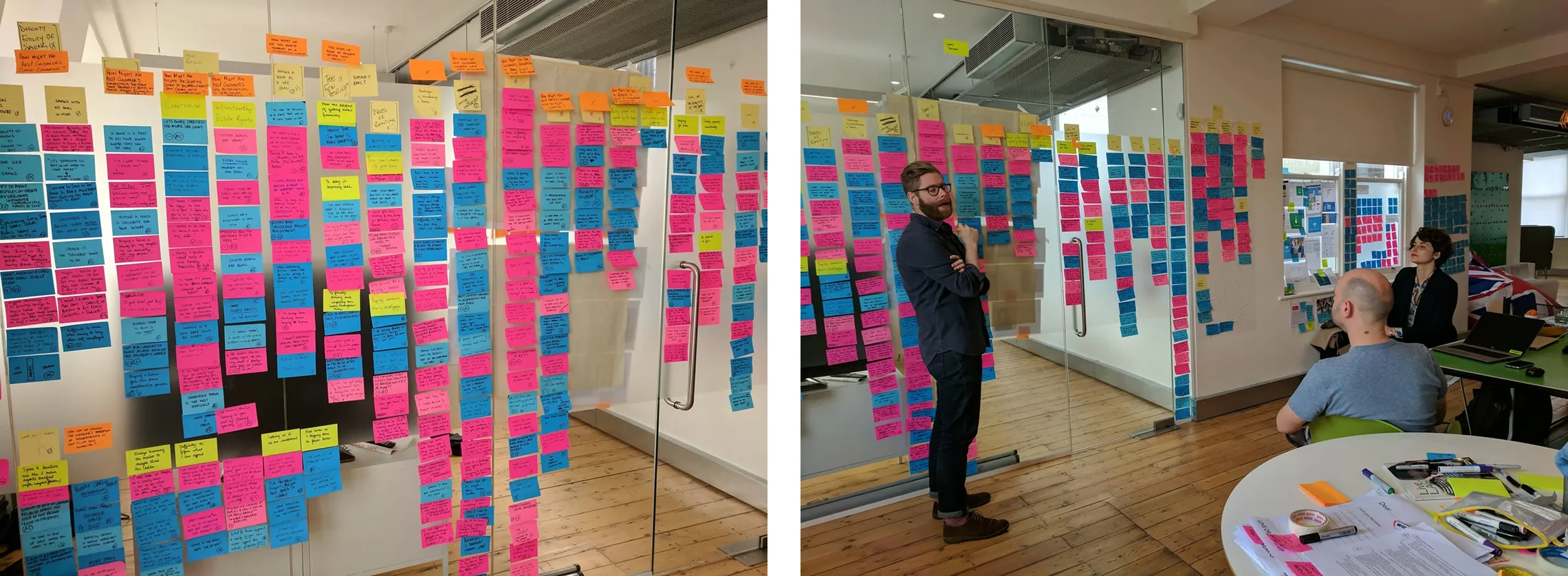
After finishing this round of discovery research we got our headphones on and into the audio from the sessions. Listening back and post-it noting out quotes, insights and ideas.
Once we had the raw data up and out on the wall we grouped and themed.
Key insights
Small business owners crave support
The owners are very grateful for all the information and insight they can get. They crave support from experts, those more experienced and with specialised skillsets.

A professional meeting space is needed
Small business owners tend not to have office space, they’re working from home, hotel lobbies and coffee shops, which come with their challenges.

A desire to meet and learn from one another
Time and time again small business owners spoke of how they wish they knew others in a similar position. People they could discuss ways of working with and share trials and errors.

Their current ‘offices’ come with challenges
The small business owners tended to work from home, coffee shops or hotel lobbies, these spaces harm their productivity and focus.

Events are a big opportunity
Small business owners want information on how to improve their business, they want to share experiences and they want to make connections.

Develop
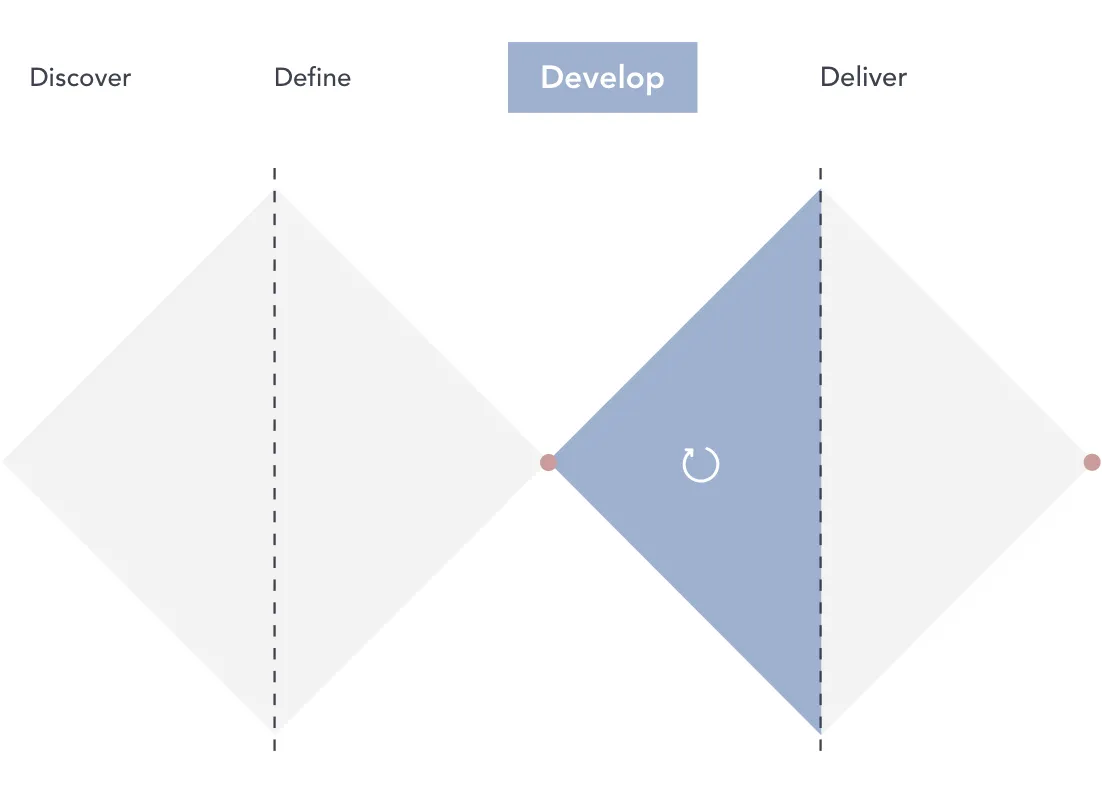
At this stage of the project we moved onto designing, testing and iterating on ideas to solve the problems and needs we had previously uncovered.
We were now in a position to come up with ideas and stimulus to test with more small business owners to try and solve some of the problems we had defined.
“We were now in a position to start creating, testing and iterating on ideas to solve the problems we had defined.”
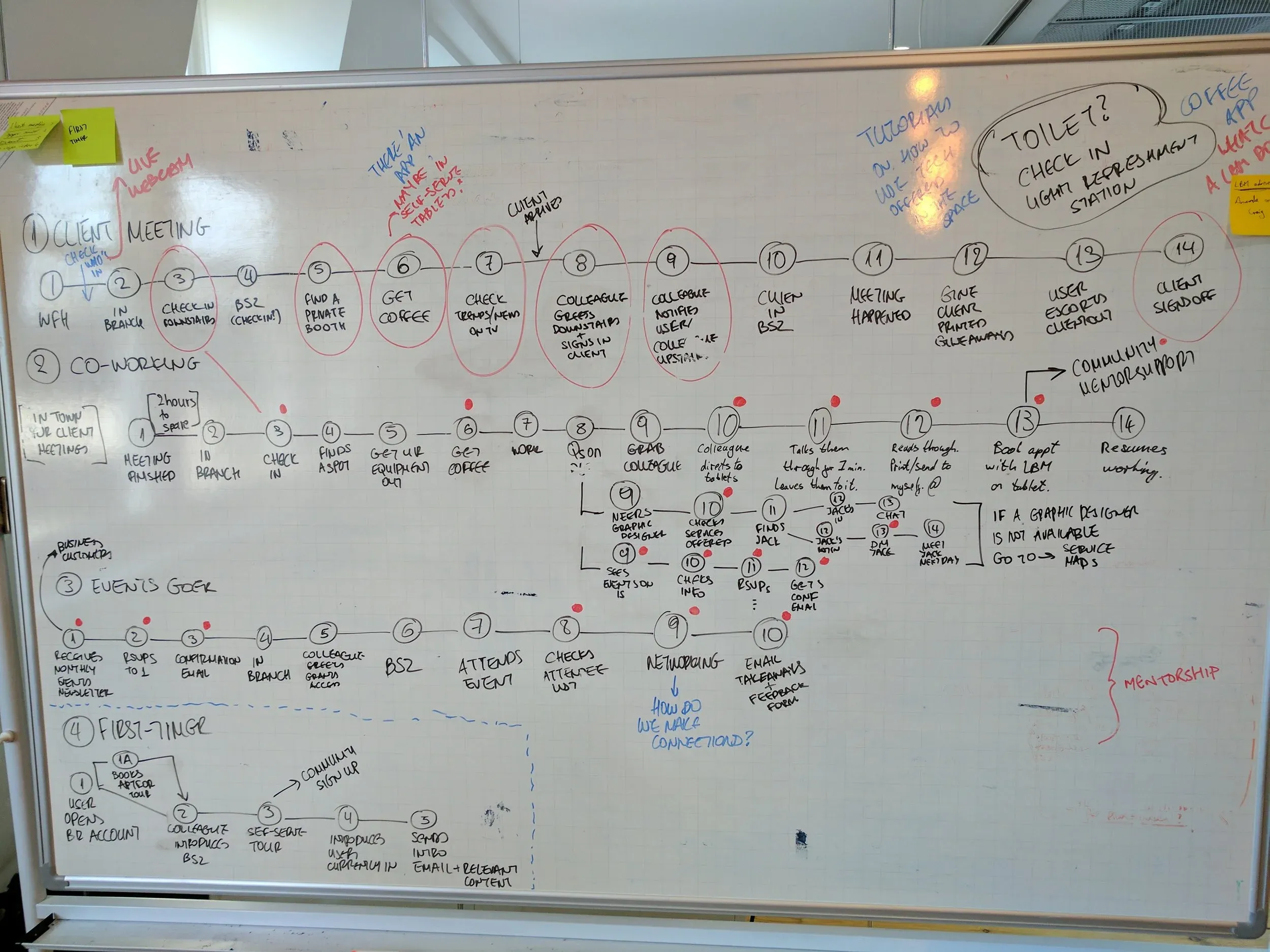
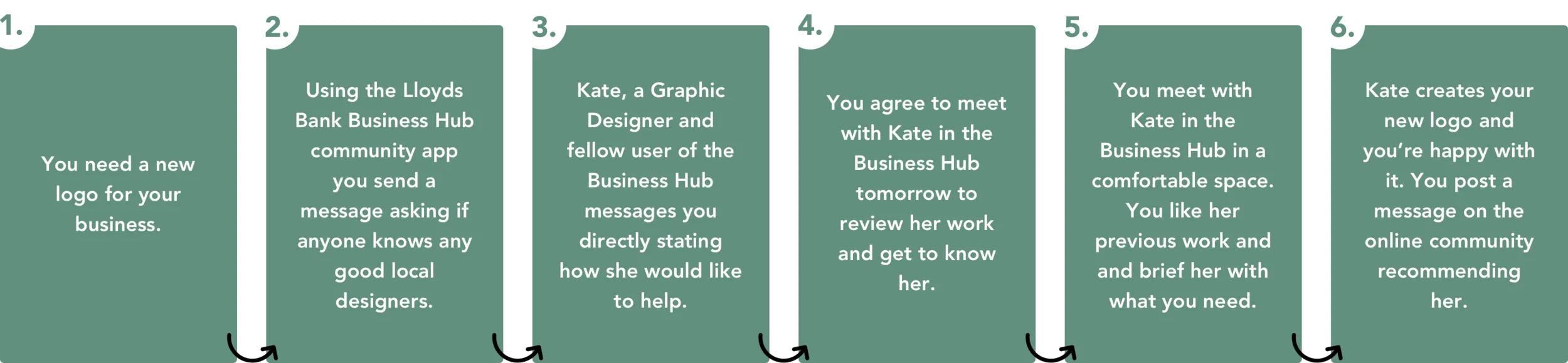
User journeys (literal user journeys)
My colleague and I identified five common and important user journeys the Business Hub would have to service in order for it to be a success.
We took the 5 journeys and designed each touchpoint that the customer would experience. Understanding what they would be thinking, feeling and doing and what the Business Hub would need to do to service the customer.
Visual stimulus
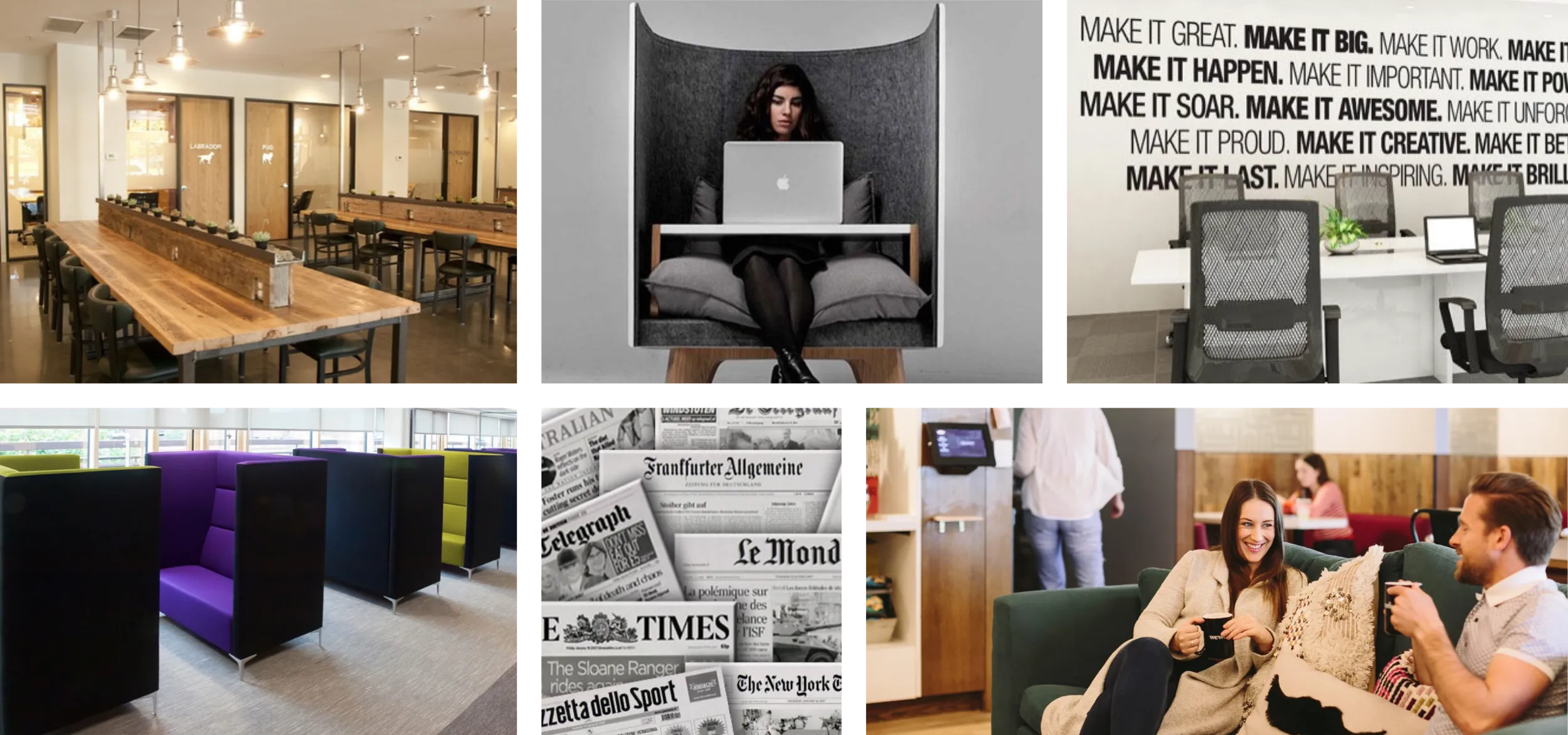
As well as the journeys we sourced and created visual stimulus that explored how the space could look, feel and function.
We sourced imagery relating to the space, such as:
- Places to work
- Meeting areas
- Floor plans
- Furniture
- Event topics and styles
Digital prototypes
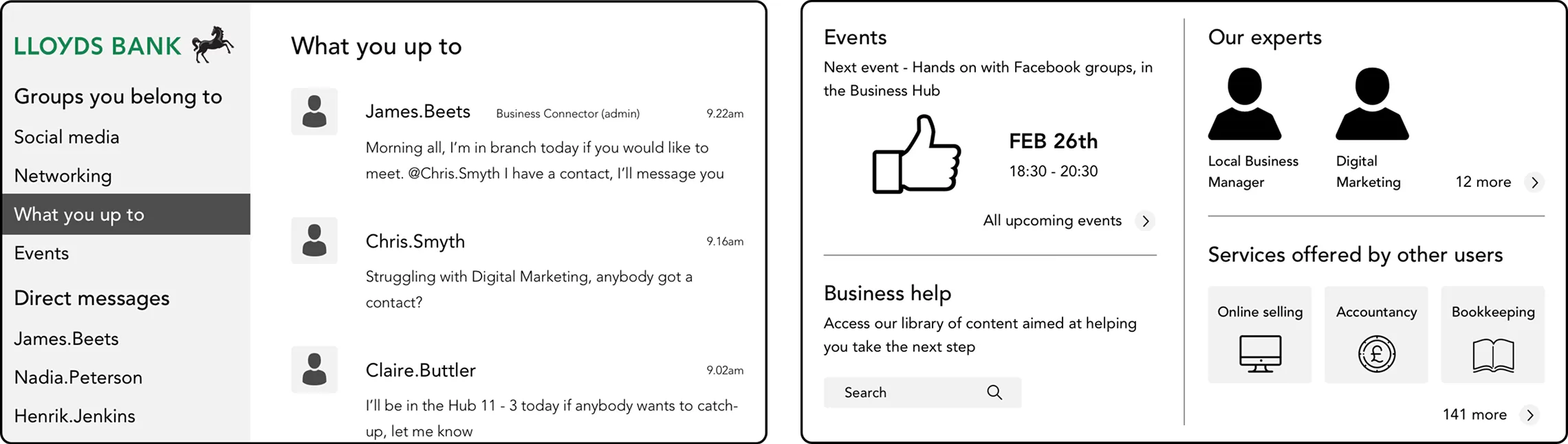
I created three digital prototypes, all serving different needs for users of the space.
Firstly, a prototype giving access to useful content small business owners may find valuable.
Secondly, a communications tool that would only be available for users of the space.
Thirdly, we wanted to understand if a large screen giving information to users would be of use to people. Showcasing upcoming events and news
Research venue - our ‘lab’
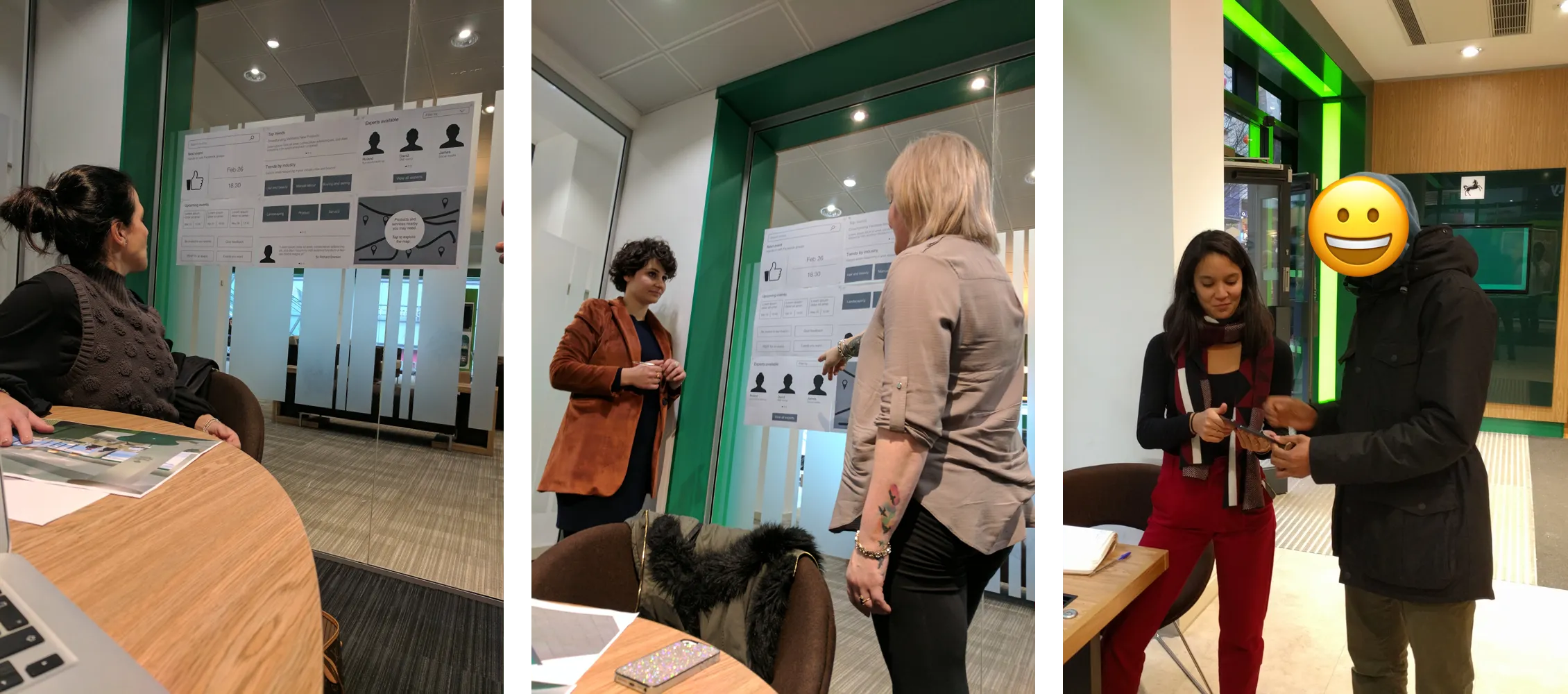
We did all of the testing and validation work in the soon to be Business Hub in the Manchester flagship branch.
We took over a meeting room, turned it into a lab and ensured clients and bank staff could watch as the sessions unfolded.
Being in the branch helped the participants quickly grasp the future of the space, it helped them understand and visualise how our prototypes and proposed floor plans and interior design would manifest itself.
Deliver
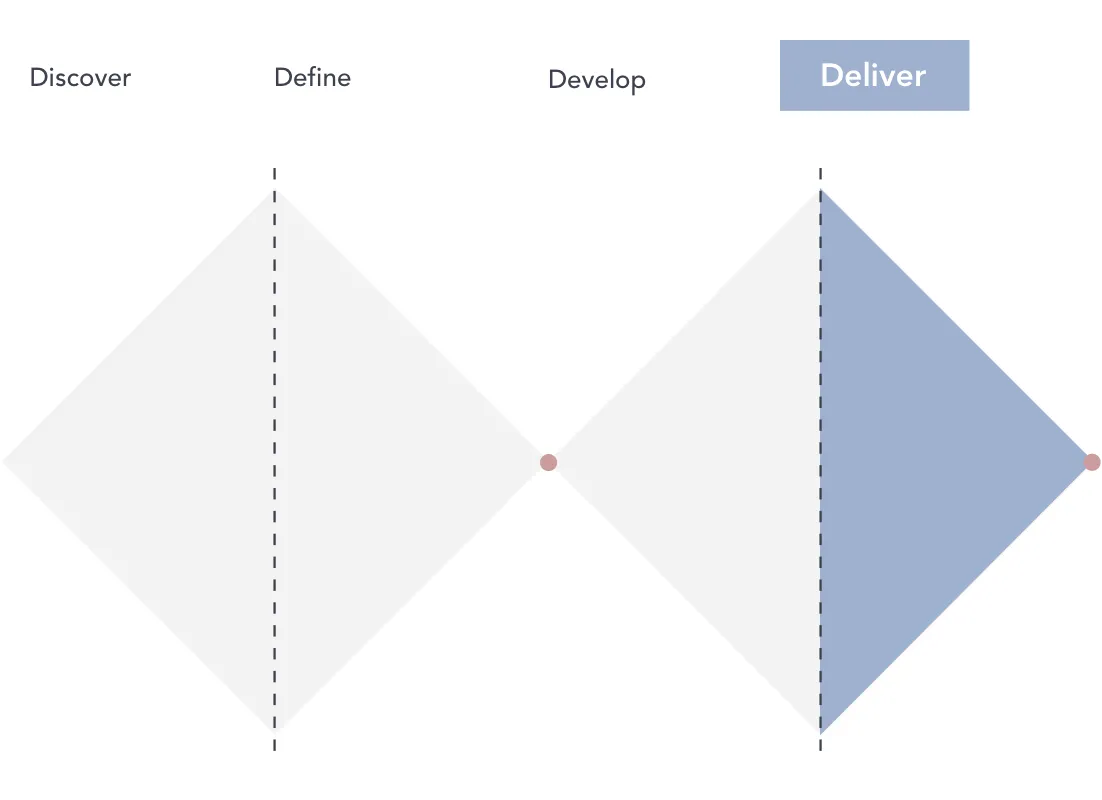
At this stage we had a good understanding of the problem space, ways to solve multiple problems, and how to best use a physical space to support small business customers.
We took all of our learnings and created a range of different tools that communicated how the space should work to ensure it was a success.
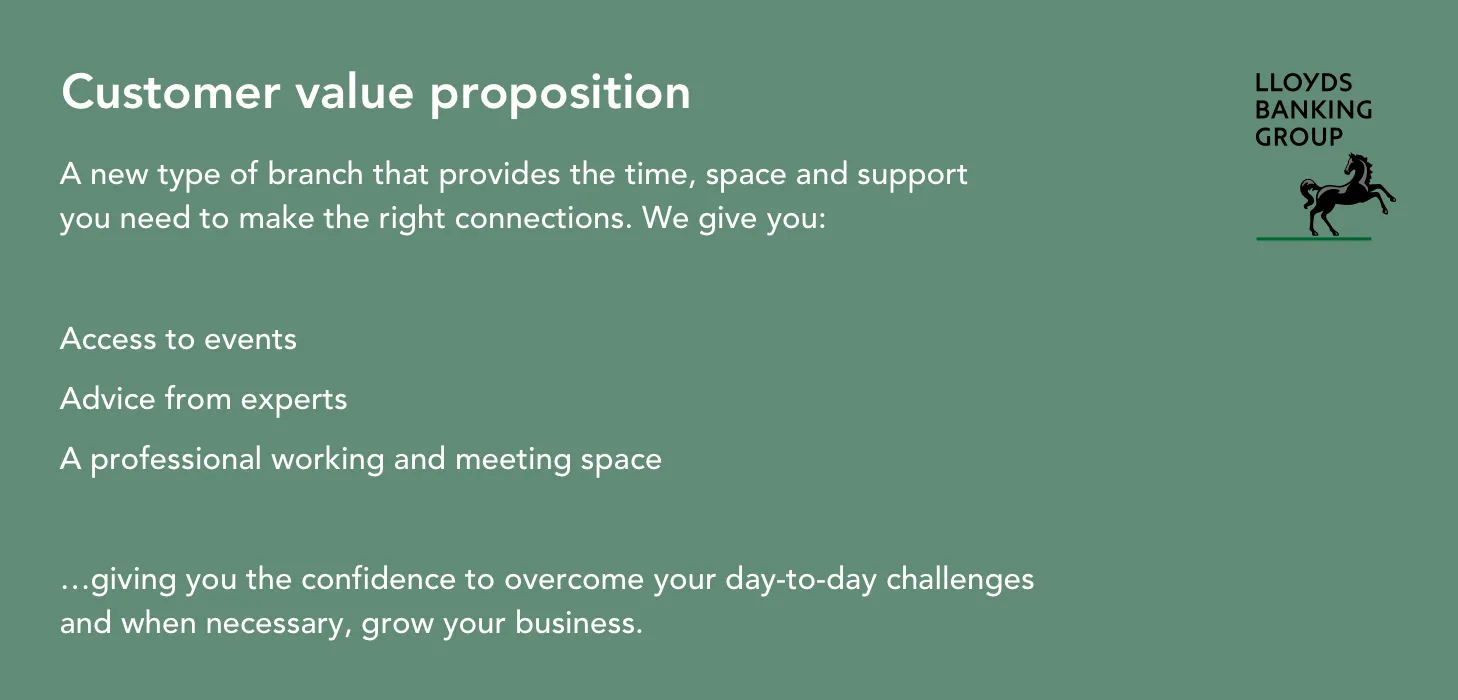
Customer value proposition
Firstly, a customer value proposition. A few sentences and key points giving a headline view summarising the true value the Business Hub brings to customers.
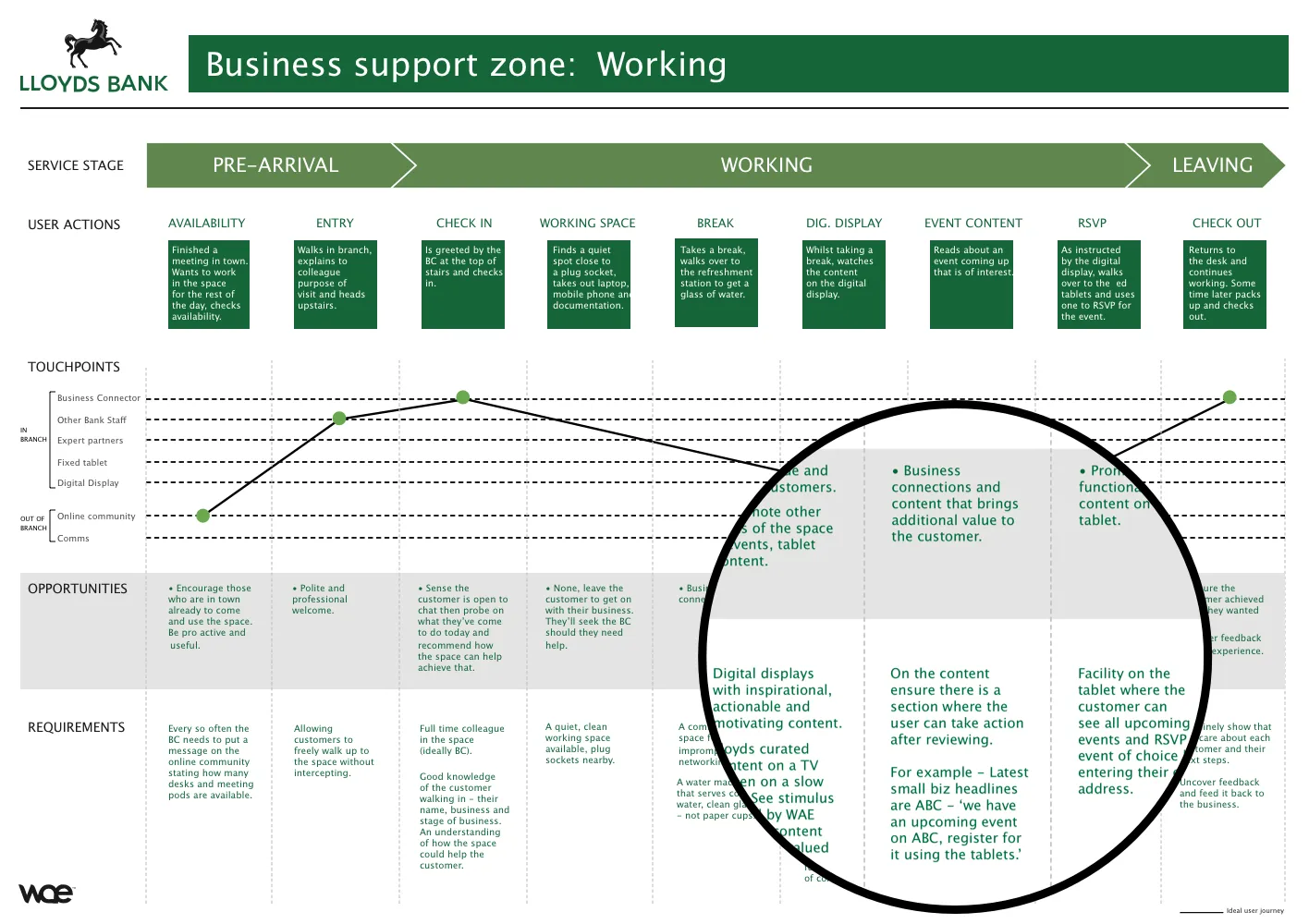
Service blueprints
Secondly, six service blueprints. During the process we uncovered six key use cases that the Business Hub needs to accommodate and do well in order to win trust.
They are:
- Client meetings
- Access to experts
- Attending events
- Feeling part of a community
- Working in the space
- First time use
Touchpoints
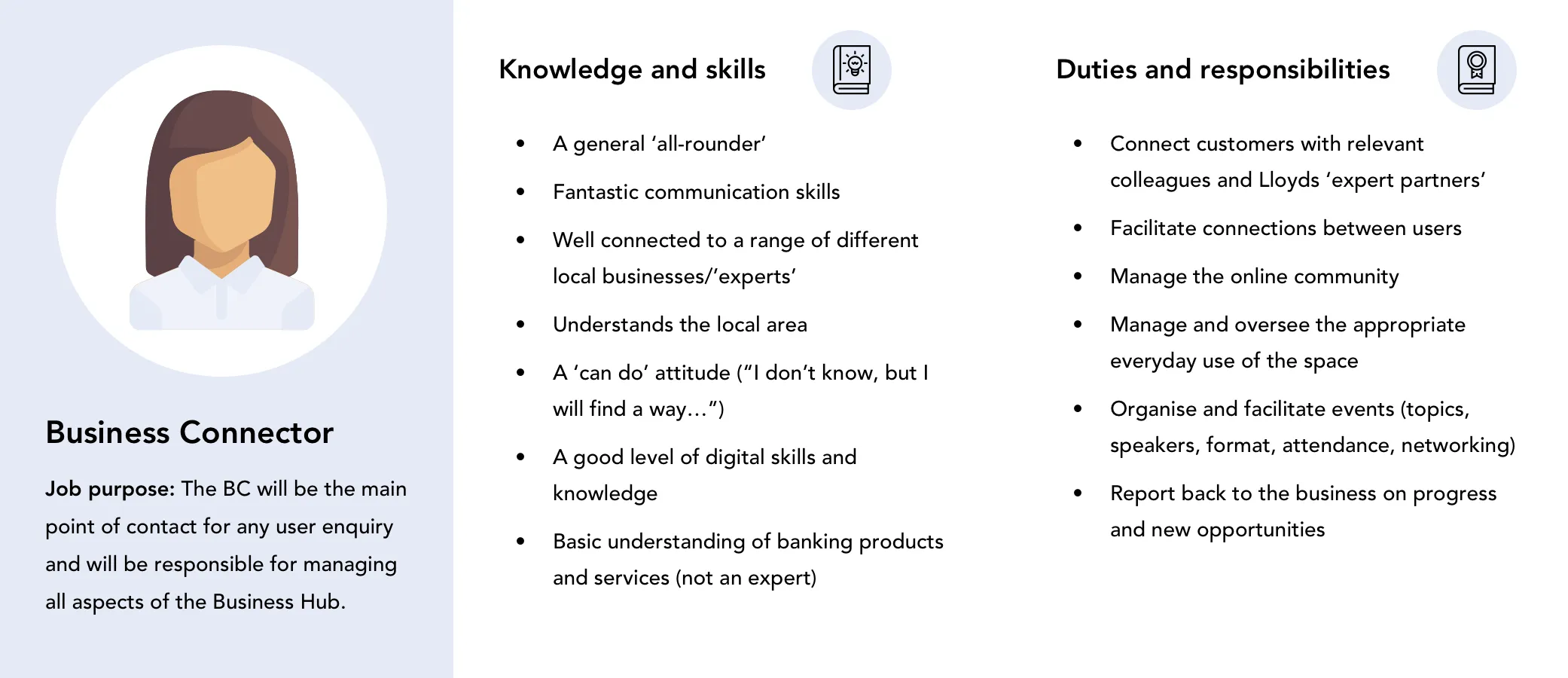
Thirdly, the key touchpoints that users of the Business Hub will be communicating and interacting with.
Touchpoint 1 - Business Connector
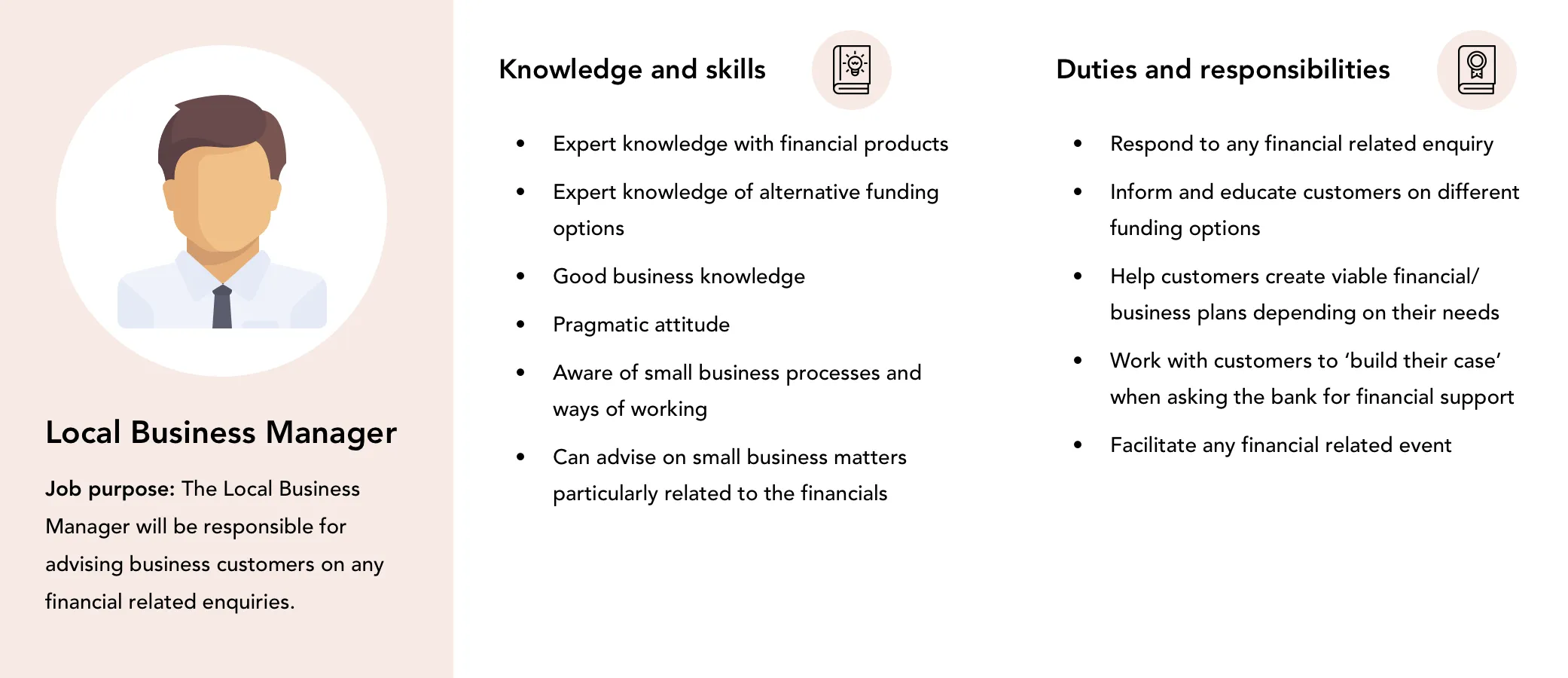
Touchpoint 2 - Local Business Manager
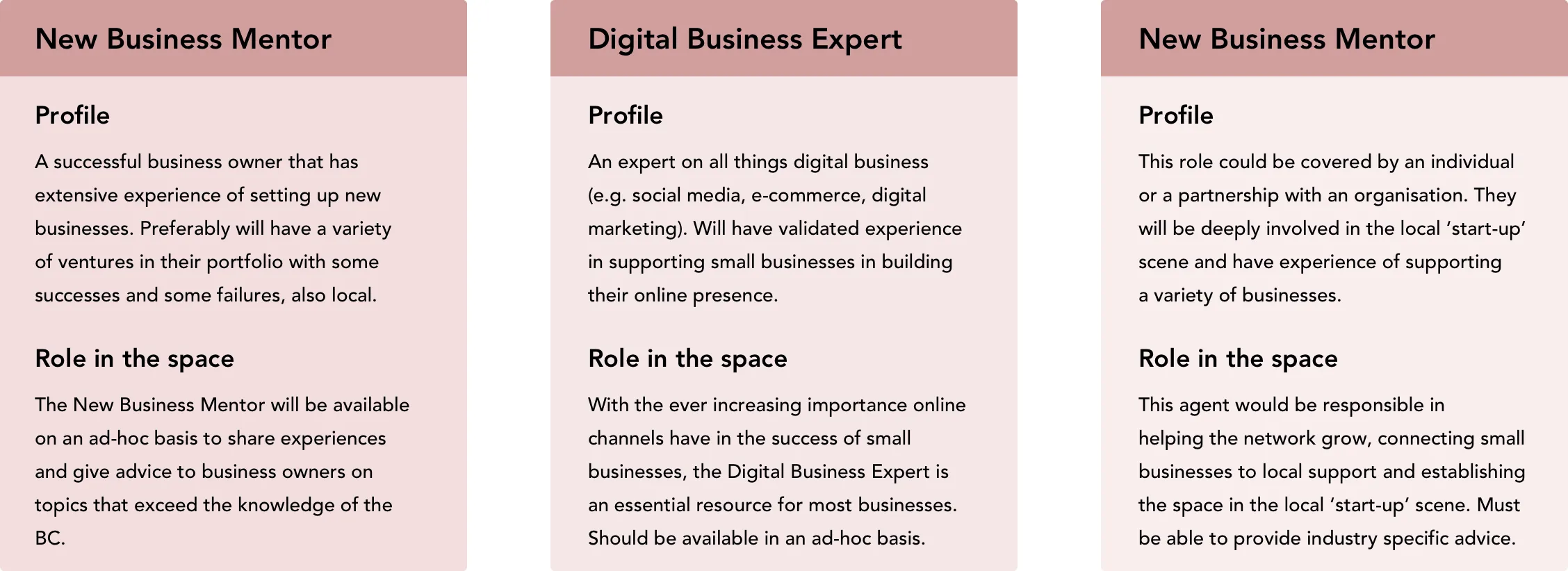
Touchpoint 3 - Expert partners
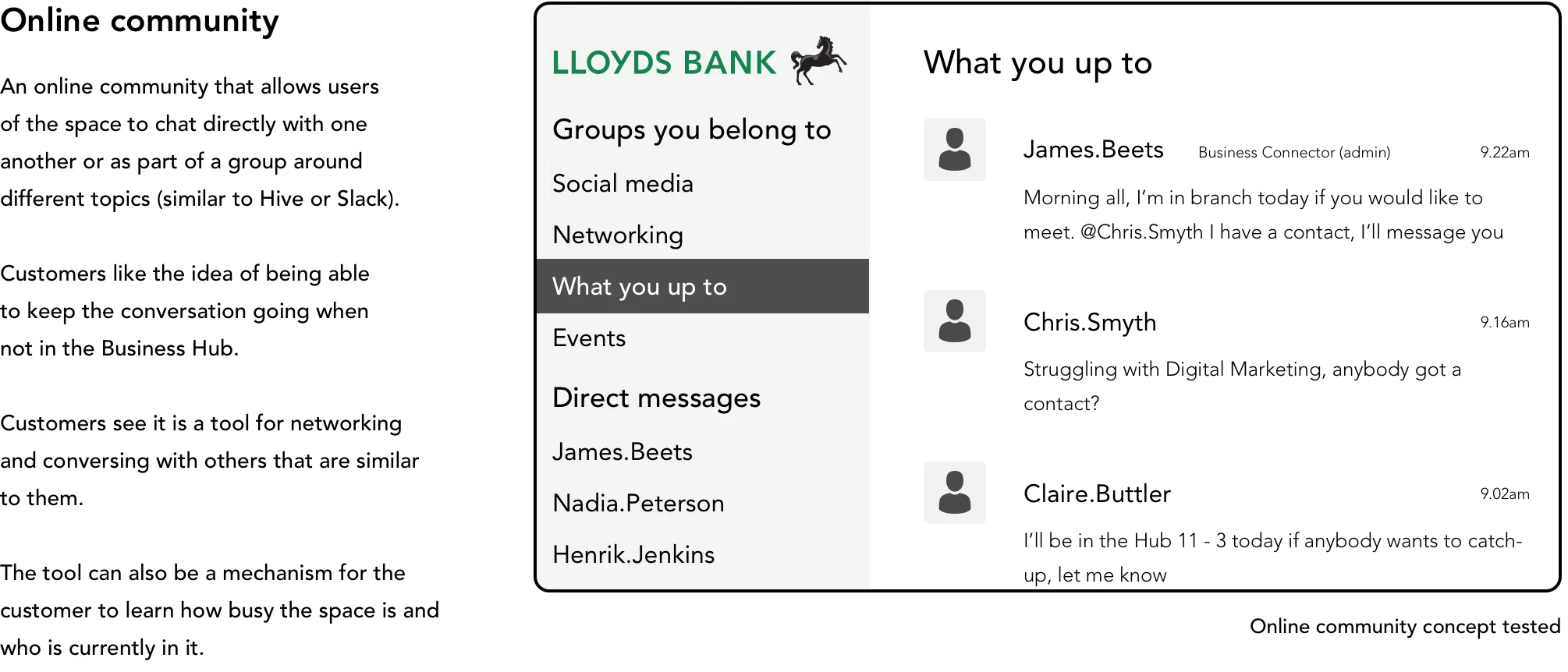
Touchpoint 4 - Online community
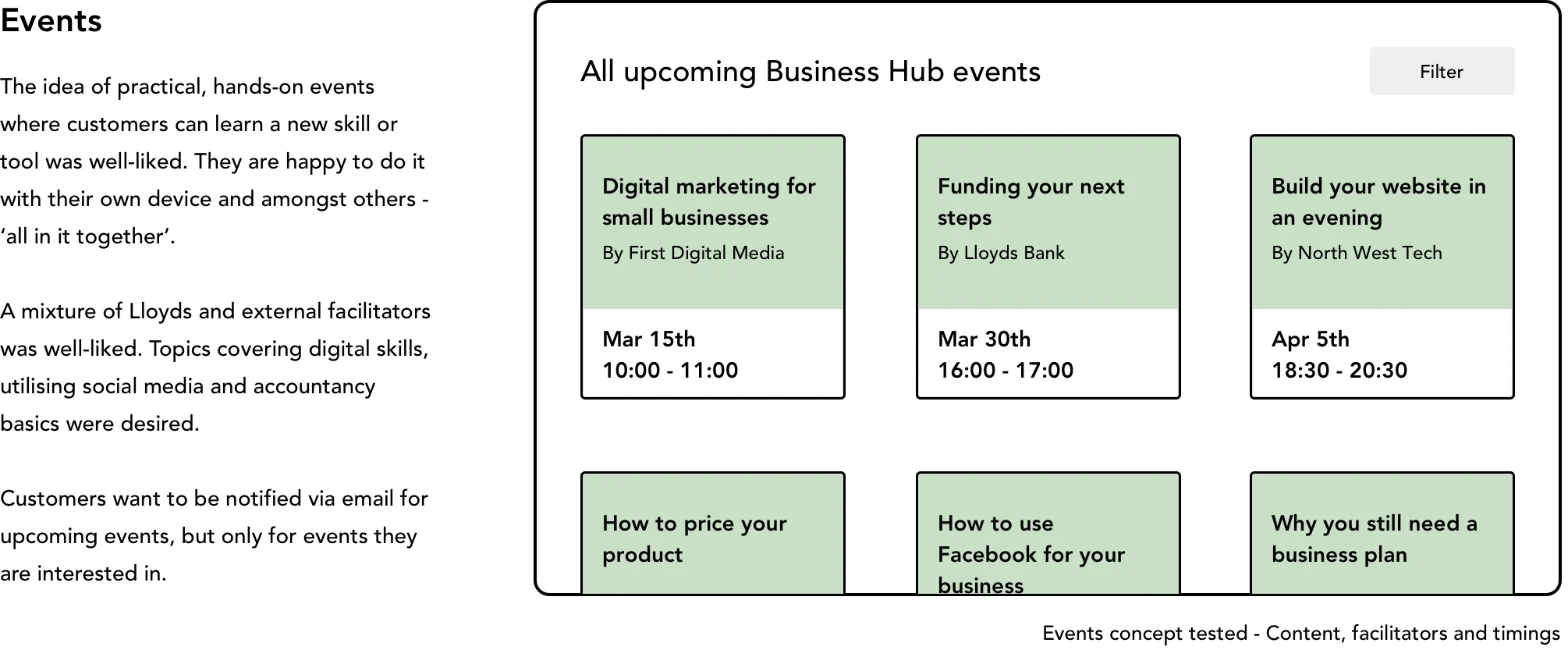
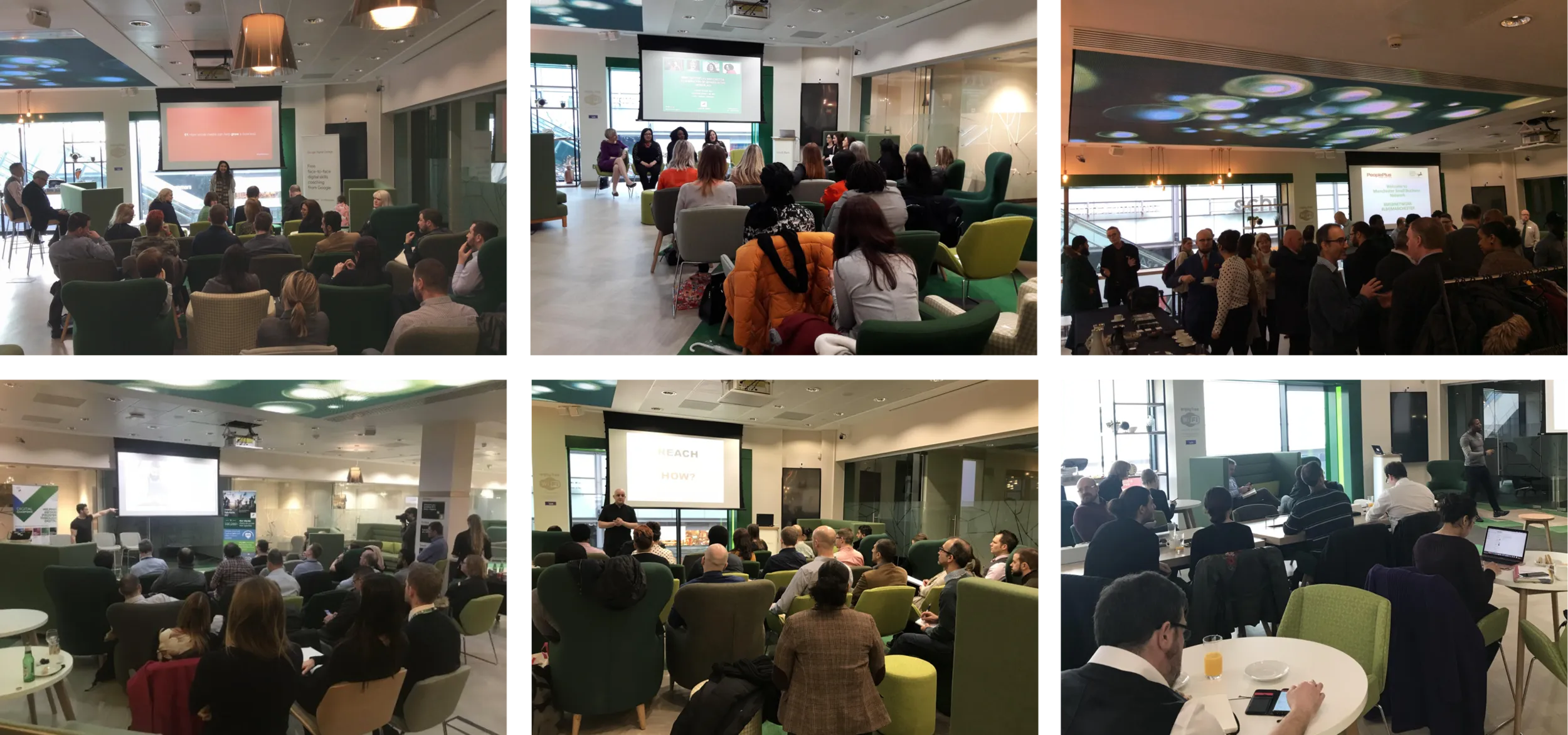
Touchpoint 5 - Events
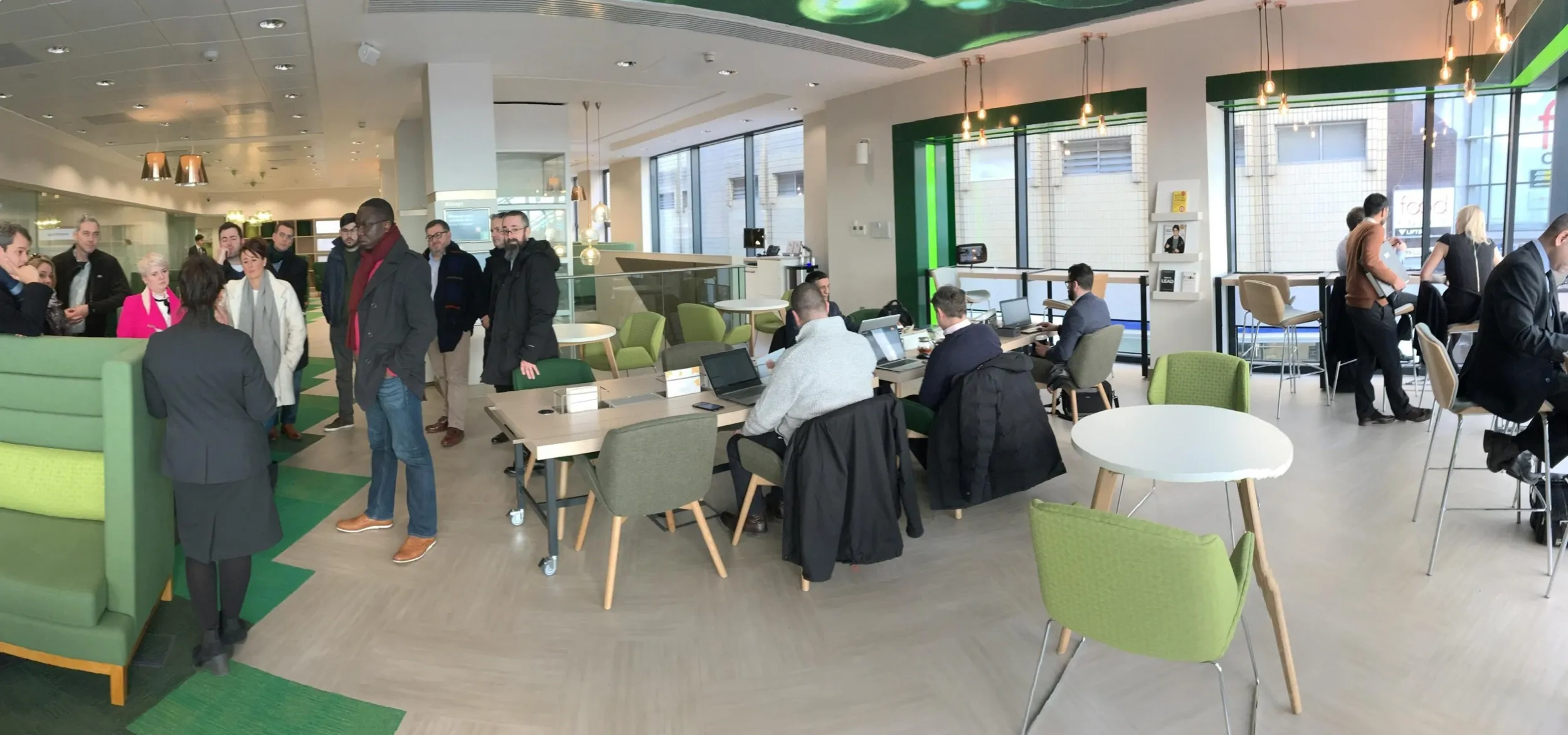
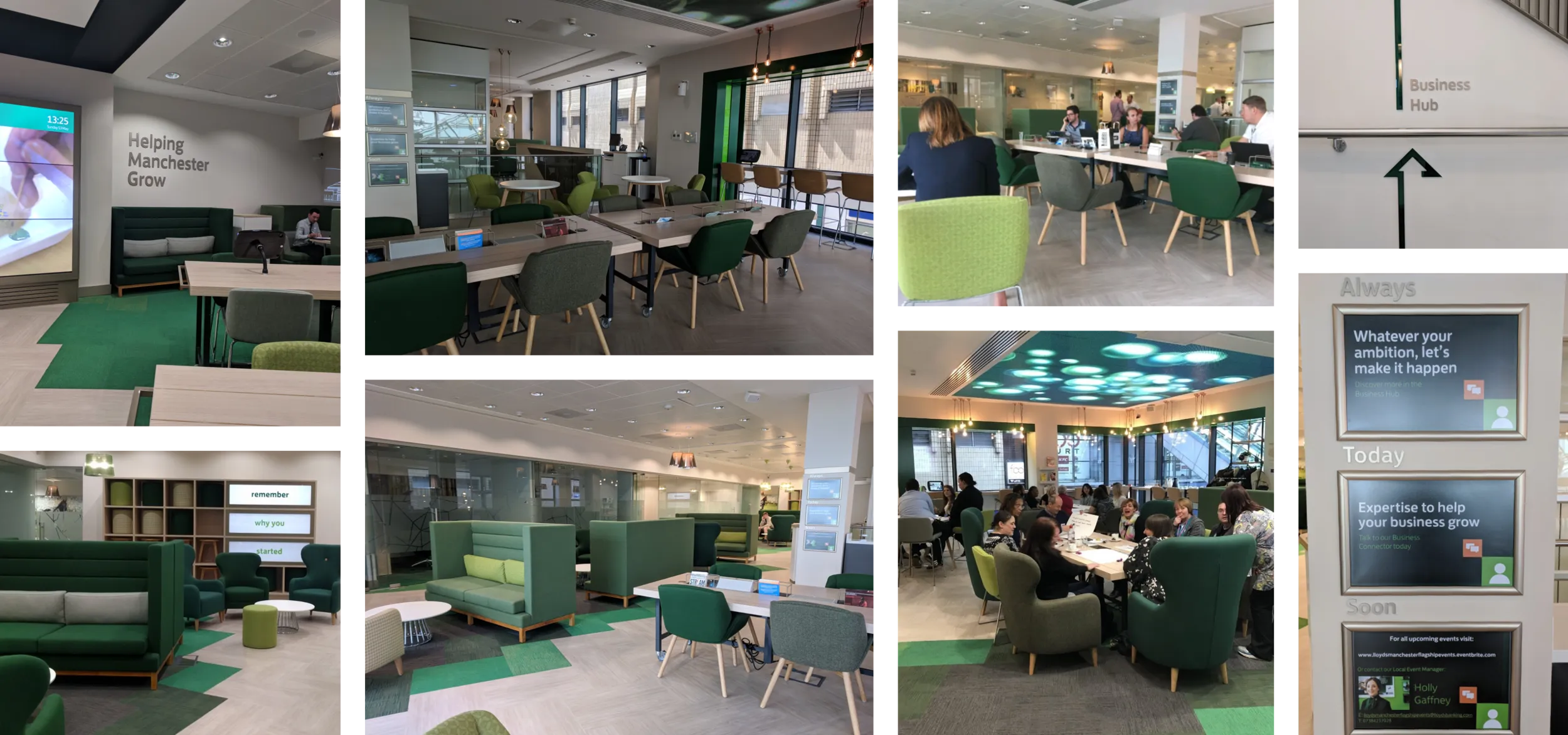
The Lloyds Business Hub, Lloyds Bank Manchester
Impact
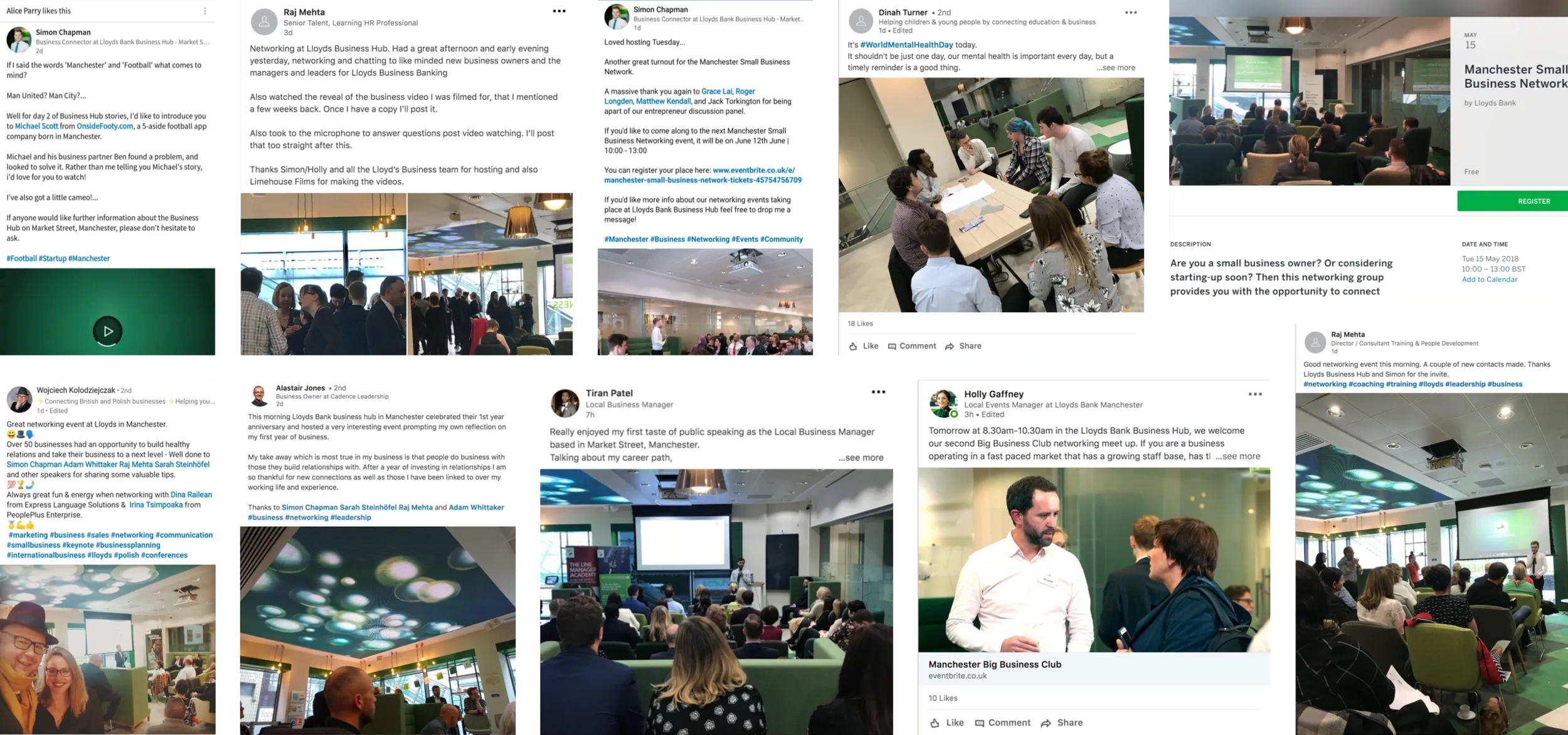
The Lloyds Business Hub is retaining and earning new business banking customers in the North West.
Small business owners have praised the branch for the support it provides in helping their business grow.
“Had a great afternoon networking with like minded new business owners and the managers and leaders for Lloyds Business Banking.”
“This morning Lloyds Bank Business Hub in Manchester celebrated their 1st year anniversary and hosted a very interesting event prompting my own reflection on my first year of business.”
“Great networking event at Lloyds in Manchester. Over 50 businesses had an opportunity to build healthy relationships and take their businesses to the next level.”
“Great networking event this morning. A couple of new contacts made, thanks Lloyds Business Hub for the invite.”
“WAE helped take an initial idea and build it into a formed proposition underpinned by robust customer, colleague, market and business insight. The outputs have helped Lloyds apply the findings in a practical and meaningful way.”
“The customers are loving the Business Hub, we’ve been having lots of great feedback from them! Its growing and growing!”